CPBL gives tour of multi-million dollar facilities
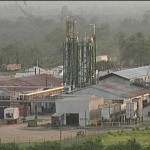
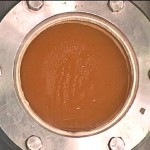 The dispute in the citrus belt is not letting up, we said earlier, a demonstration is planned for this Tuesday by the Citrus Growers Association against its subsidiary Citrus Products of Belize Limited. Both can’t agree on a number of issues; the CGA is primarily aggrieved that it owns fifty one percent interests of the company and still does not have the control of the CPBL. That aside, when we visited last Friday as part of a media pool, CPBL showed off its modern multi-million dollar facility which it hopes will open up new markets in Europe. Delahnie Bain reports from the Pomona Valley.
Delahnie Bain, Reporting
CPBL has invested close to sixteen million dollars to upgrade its facilities. The first of those upgrades was in the main processing plant in Pomona Valley, where a new tank farm is saving the company big bucks on storage costs as CEO Dr. Henry Canton explains.
Dr. Henry Canton, CEO, CPBL
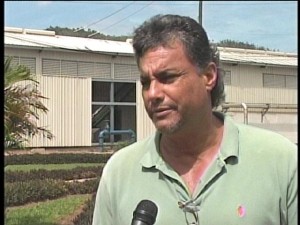
Dr. Henry Canton
“We’ve pretty much remade the whole factory over the last five, six seven years focusing primarily on efficiencies. So although you’re not seeing it, but through the automation and through some of the equipment that we put in, we’re getting much better yields and much better efficiencies on the factory. The tank farm, which I think you see which allows us to store a million gallons of concentrate on shore. When we make concentrate. Originally we could only store twenty percent or twenty-five percent of what we made. So we were always in a hurry to ship it into some market and then have to pay storage costs offshore.”
The rest of the plant was also automated to keep the production facility in tip top shape. And that’s a much needed asset since the company is tasked with turning oranges into export quality juice. CPBL’s C.O.O., Jaime Alpuche goes through the intricacies of the process after the fruits are brought in, cleaned and the oil is extracted.
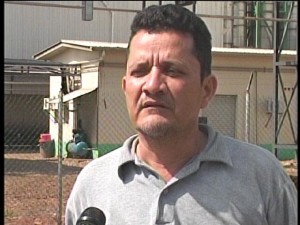
Jaime Alpuche
Jaime Alpuche, Chief Operations Officer, CPBL
“The juice is then extracted—the reamer operates on a similar principle as your home where you cut the fruit in half and then ream out the inside; the juice, the seeds and pulp. That juice, which we term the raw juice then goes down to the finisher, which is a mechanized strainer much like you would at home, you strain out the pulp, the seeds and insides from the juice for separation and that is the job of the finisher. From the finisher, the juice would then go into the finish juice tank which then feeds depending on whether you are making concentrate, the juice would then go from the feed tank into the evaporator where we evaporate the juice. If we’re not making concentrate, but in fact we’re using what we know as not from concentrate juice or same strength juice, the juice then goes into a pasteurizer where there’s a light treatment applied in order to destabilize the enzymes and kill the microbes.”
Another major step toward the future of the industry was the upgrade of the Value Manufacturing Company, which is owned by CPBL. VMC started out in 1986 making squashes and today the facility holds top of the line equipment that produces and co-packs for several countries in the region.
Dr. Henry Canton
“The value added end is our dream because we honestly believe that the day that we can go as much as we can from a commodity market into a pack and set the price, that we’d be able to stabilize the price in such a way that we won’t be in the furrows or up in the peaks.”

Caleb Wade
Caleb Wade, Production Manager, Valley Manufacturing Company
“They’re Tetropak equipment, manufactured in Europe primarily. The equipment is very expensive, very, very technological. Everything is automated, everything is controlled via touch screens and we have operators that are trained to handle this type of equipment.”
And since September 2009, that equipment, which is one of only four in the world, has been producing up to seven thousand liters of juice per hour to fill orders coming from Jamaica, Barbados, Trinidad and Tobago and Guyana
Caleb Wade
“The TGA juices start as a blend from the main facility that’s then pumped over to our holding tanks. It is then pasteurized between one-eighty-five and two hundred degrees Fahrenheit fir a very short period of time to preserve the quality of the juice. It is then sent to our sterile tank and then—or pushed over using sterile air cover to the filling machine where it is then packaged.”
David Craig, Commercial Director, Value Manufacturing Company
“You saw the size of that production facility, that we have back there, we want to put in other lines. We want develop Value Manufacturing company as a full beverage industry. If we have other products, different types of products then we have the leverage to get into all the stores; any different channel that we can.”
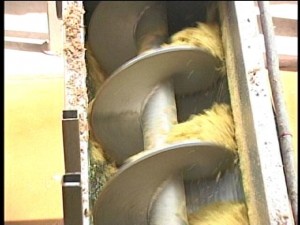 But the baby of the bunch is the new feed mill that is taking the waste from the juice production and turning into foreign exchange.
Jaime Alpuche
“The solid waste comprises of the peel and the pulp, those are then dried, about forty percent of the molasses is added back before drying and it comes out in feed flakes. It is then passed through a pelletizer and we end up with livestock feed in pellet form. We have begun selling the feed locally and there are a few farmers who are using it. But the bulk of it like the bulk of our juices is for the export market. We do have customers who are interested in the feed both in the Dominican Republic and Costa Rica and more recently some expressions of interest in Guatemala also.”
CPBL is producing for the region, but its ultimate goal is to reach the rest of the world. The saying goes… you have to spend money to make money. Delahnie Bain for News Five.

[…] seriously. Grow up. Leave a Reply. Name (required) Mail (will not be published) (required) …CPBL gives tour of multi-million dollar facilities …David Craig, Commercial Director, Value Manufacturing Company You saw the size of that production […]
Mysore Fruit Products Ltd. (MFPL) is manufacturers & exporters of a various fruits products like Mango pulp, Banana pulp and Guava pulp in India.for more details visit http://www.mysorefruits.com/