Healthy Living looks at the causes of infertility
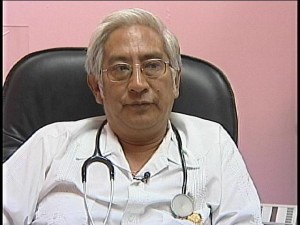
Dr. Marcelo Coyi
Infertility is an issue that many couples experience. But if you thought it is a condition only for women, then think again, because this medical problem extends to both sexes. Healthy Living this week discusses this issue with Dr Marcelo Coyi.
Marleni Cuellar, Reporting
One of the natural desires of couples is to have children. Despite nature’s intricate design for conception to occur, there are some couples who experience difficulty in conceiving. The self diagnosis usually made is that the woman must be is infertile. According to, Obstetrician & Gynecologist, Dr. Marcelo Coyi, infertility is a medical problem not exclusive to women.
Dr. Marcelo Coyi, Obstetrician/Gynecologist
“Infertility is defined as a couple having the inability to conceive or have a baby over a time span of one year. We say in women above thirty-five we decrease that time span to over six months. Infertility in general about a third of the reasons for infertility is problems with the woman about a third is problem with the man and the other third is combine between both of them. So they equally share the reason for infertility.”
In order for conception to occur, a woman must release an egg from her ovaries, which must travel through her fallopian tube to her womb, the man’s sperm must unite with the egg which then attaches itself to the uterus. Infertility is usually a result of malfunction within any part of this process.
Dr. Marcelo Coyi
“Basically it’s either the ovaries of the woman is not producing eggs or if they do produce eggs their tubes are blocked so there is no way that the egg and sperm can unite. And in men, it is basically the inability to make sperm. The main reason for the blockage of the tubes in Belize is what we call blocked tubes due to pelvic inflammatory disease and pelvic inflammatory disease is a sexually transmitted disease where there is infection of the tubes and after the infection of the tubes there is blockage of the tubes.”
Unlike the tell-tale signs of pregnancy, infertility does not exhibit obvious symptoms and is most times unnoticed until a couple tries to conceive. When making a diagnosis in women, Dr. Coyi explains that a medical history of the patient is vital.
Dr. Marcelo Coyi
“In the women for example, if they have irregular menstruation, absent menstruation, light menstruation that tends to point towards ovulation problems. We mention if they have a history of pelvic inflammatory disease, chronic pelvic pain, that points towards blocked tubes. If they have history of liquid or we call it galactorrhea, milk expressed from the breast it tends to point to a hormonal reason for not producing eggs. And so after a clear history you can more or less figure out where to direct your investigations.”
A blood test of progesterone levels is also a part of diagnosing infertility as a measure of egg production. There are certain variables that may contribute to infertility and some long standing myths that don’t.
Dr. Marcelo Coyi
“The older a woman gets the older the eggs are because the eggs of a woman are as old as the women herself and so it leads to an increase incidence of genetic abnormalities for example the down syndrome which is related to the age of the mother. Above age thirty-five as a woman gets older, she has less eggs available for conception as she gets older she may have concomitant medical disorders, diabetes hypertension, they’re a sicker population. So age does have a role to play. Lifestyle also, in terms of smoking, alcohol usage, other drugs, medication that a doctor may interfere with ovulation so lifestyle definitely plays a role. The oral contraceptive are rapidly removed from the body so it usually does not cause infertility but certainly the depo-injection, the three month injection, usually your fertility takes about six months to a year to return to normal and women must understand that it is not a rapid return to normality when you use the injectibles but it does not cause infertility.”
