Red Cross and Crooked Tree school strengthen response and emergency plan
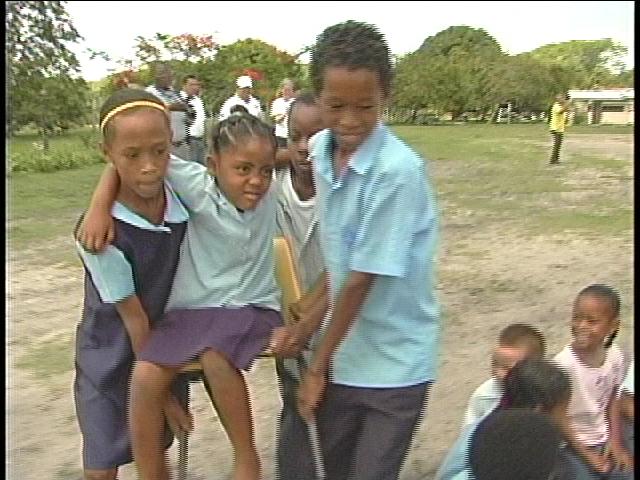 The hurricane season kicked off on June first and aside from the response mechanism that the Belize Red Cross has in place, it also focuses a lot of attention on preparedness in times of disasters. In Crooked Tree Village today standard four students were engaged in a ten-month long programme financed by the European Union and aimed at strengthening the response and emergency plans at the school level. News Five’s Marion Ali reports.
Marion Ali, reporting
They may appear to be playing, but these students of Crooked Tree Government Primary are actually part of a simulation exercise as part of a ten-month long programme in disaster management.
Ian Glory, Disaster Management Coordinator, Belize Red Cross
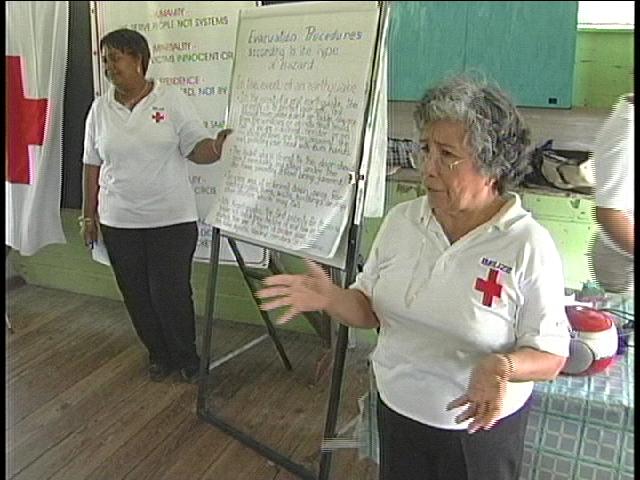
“We look at the school and we work with them for them to understand what disaster preparedness and disasters are all about, and then we form them into brigades. There’s a fire brigade, there’s an evacuation brigade, there’s the ones that deal with the psycho-social, so they have different groups that have different responsibilities and roles to play within the school.”
The programme focuses on mainly rural areas that may be vulnerable when there is a crisis.
Elizabeth Eide, Norweigian
“As Belize is prone to disasters it’s important to educate the children and the European Commission Office for Humanitarian Aid has a programme called DiPeCo, Disaster Preparedness, so we seek funds from the European Commission and we got this for Belize.”
Marion Ali
“In this particular case how much are we talking about?”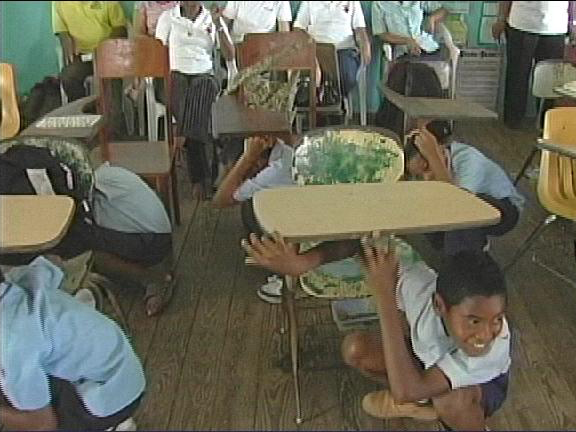
Elizabeth Eide
“We talk about four hundred thousand Euros.”
And while Belize is in the tropics and it lies in the path of hurricanes, the earthquake that shook southern Belize in May of 2009 has placed new emphasis on that category of disasters. Today’s simulation covered just that and the students were receptive to the training.
Gabriel Mejia, Student, Crooked Tree Government School
“Yoh protect yoh head because that dah di most important thing and that mek yoh learn.”
Marion Ali
“And why do you stand in the doorway?”
Gabriel Mejia
“Soh the door noh jam and fire in yah, yoh cud get burn up in yah.”
 Marion Ali
“If somebody is bigger than you and you can’t lift them, then what would be the next thing that you would do to help them?”
Zara Baptist, Student, Crooked Tree Government School
“Ask somebody for help.”
Marion Ali
“What would you do if a hurricane strikes?”
Edwin Gillett, Student, Crooked Tree Government School
“I would go in dah cement building because dah hurricane shelter. Dis cement building.”
Marion Ali
“That’s safer than this wooden one right?”
Edwin Gillett
“Yes ma’am.”
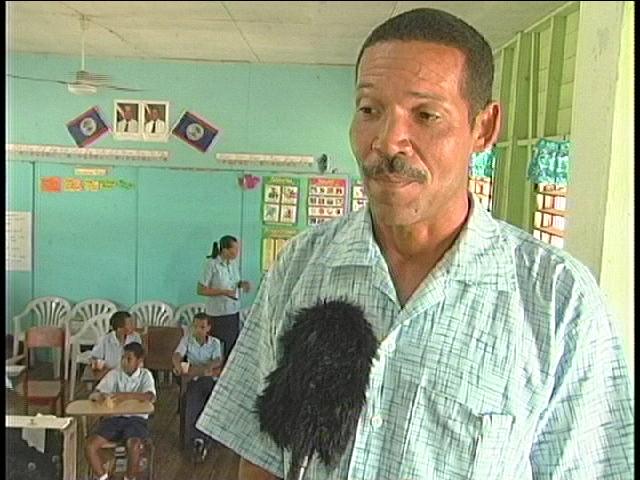
But while they were attentive, the children’s homeroom teacher, George Tillett, says that the children did not immediately take to the programme but that is a far cry from where they are now, and he thinks that is something that can only be achieved by a good trainer like Marian Magana.
george tillett
George Tillett, Teacher, Crooked Tree Government School
“At first they were like, why is this? We’re not going to have an earthquake or any disaster. Why doing this with us? First they were kinda reluctant to the programme, it wasn’t welcoming to them. And Ms Magana I think did a very good job of getting the programme through and getting it in their heads that these incidents could occur and now they are welcoming it and you can really see where they enjoying it. Now they would pause and pick up a nail or a piece of bottle and say, “Hey teach, this is a hazardous object. First they weren’t safety conscious at all.”
Marian Magana, School Safety Officer
“The kids are very smart, they are eager to learn and they love this activity. It’s something that is not like their regular school classes. There’s a lot of activities. They had to walk all around the yard, identifying their own vulnerabilities.”
Marion Ali
“In the simulation itself I saw that they were also serious about the exercise and tried to avoid laughing.”
Marian Magana
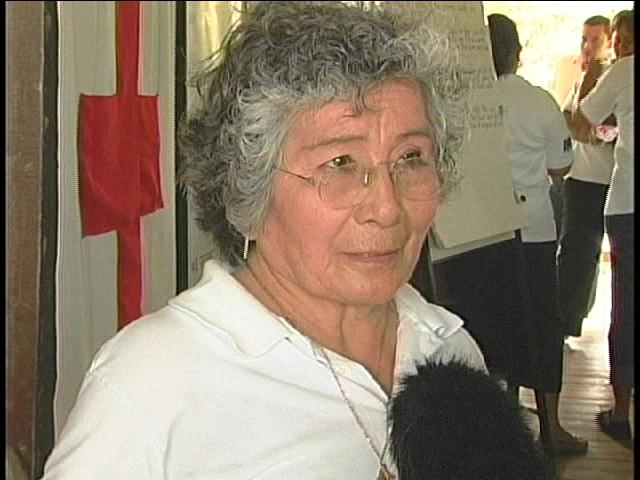
marian magana
“Yeah, we told them that when they do things like that it’s really something serious. It’s not a joke right and so some of them really took it serious, which I’m really happy about.”
The project has had successful reviews in the Toledo District in 2009 and by all indications; Red Cross officials already predict the 2010 project will be as equally successful. Marion Ali for News Five.
This afternoon a similar simulation took place in Scotland Halfmoon Village, involving the community leaders. The programme ends on January fifteenth 2011.
